unseen natives: tired

I’m pooped! Over 200 miles driving today on top of an insomnia night and more prepping at the site. I have no energy to deal with downloading  photos. Hopefully on Thursday after installing the fish I’ll pull out the camera and get stuff organized.

All I can say is my trip to Portland let me down. At least the moon was beautiful with a planet placed over it’s glow. Ahhh!

Thanks for checking in!

Gale

Unseen Natives: Mondays progress

 This is my adventure into creating an art installation for the Art in Rural Storefronts project sponsored by The Arts Center of Corvallis. ARS serves regional audiences in Linn and Benton Counties by bringing innovative, thought- provoking art projects to rural communities that lack spaces dedicated to contemporary/non-commercial art.  Three artists  were chosen to participate.  The project is funded in part by the Oregon Arts Commission.

Today I made friends with the Skill saw. For some of you, that’s not a big deal but I’ve always been leery of using this power tools no matter how convenient it is. Today I had to.

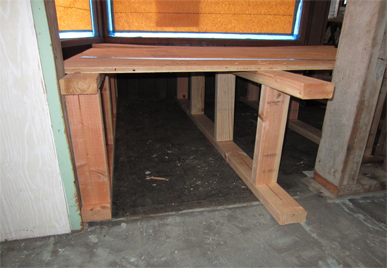
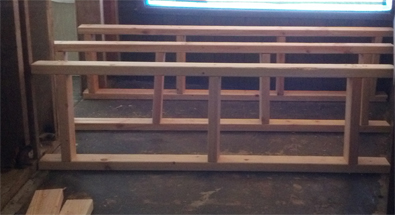
Monday Mission: To build the stage/platform.

Above: putting together the under frame

Below: topped with plywood

Side view
Looking down on the completed top (ok, it’s missing a couple of screws because my batter pack ran out of juice)
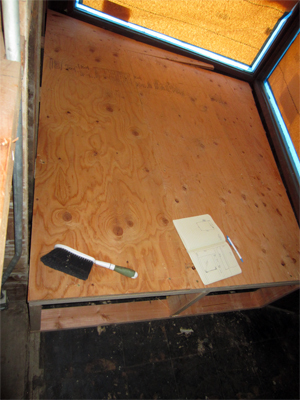
Having a stage will allow me to mount lights from below. It will also be covered with up to 50 pounds of clay. Yes, I just had to bring the muddy ditch feeling to the piece.

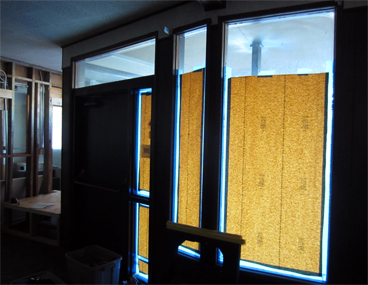
Oh my, more windows to get settled.

Below are the fish egg start. Hopefully the box will be filled before Saturday!

Tuesday: I’ll be running around collecting more supplies to build the backdrop and something to transport the fish.

🙂
Unseen Natives: Installation week start

 This is my adventure into creating an art installation for the Art in Rural Storefronts project sponsored by The Arts Center of Corvallis. ARS serves regional audiences in Linn and Benton Counties by bringing innovative, thought- provoking art projects to rural communities that lack spaces dedicated to contemporary/non-commercial art.  Three artists  were chosen to participate.  The project is funded in part by the Oregon Arts Commission.

Oh my! Is it really that time already?It’s Installation Week!!! Kind of a shock to be at this point already. Thanksgiving really sucked the energy right out of me with prep of the home and a meal for 8. Then there was a day in Eugene and Saturday was the big football game viewed over at a friends. Sunday was fish egg production. I’m up to 47 eggs!

So today I’ll be in Sweethome getting my stage/base together. The Isuzu is loaded with wood and tools already with more to add this morning. Photos of progress to come.


Unseen Natives: progress

This is my adventure into creating an art installation for the Art in Rural Storefronts project sponsored by The Arts Center of Corvallis. ARS serves regional audiences in Linn and Benton Counties by bringing innovative, thought- provoking art projects to rural communities that lack spaces dedicated to contemporary/non-commercial art.  Three artists  were chosen to participate.  The project is funded in part by the Oregon Arts Commission.

November 13: Things are moving forward slowly. Very slowly. Granted, I’ve had several bouts of gluten poisoning (not intentional) and it takes me many days to start feeling back to normal. Maybe I should just stop eating out! Wait! That’s my only social life these days!

Anyway, here a a couple of head shots of the fish.

Still have a few head alterations to make but it’s coming along.

Looking down the long row:

I’ve been experimenting with how to keep my focus on the project for longer periods of time in the studio. When working on printmaking, I use high energy music to keep me focused. For some reason this isn’t working for the fish project. In the evenings I’m reading Oliver Sacks book on music. He (and other researchers) seem to think Mozart is the way to increase creative productivity. After combing through the CD rack I discovered none. Tchaikovsky yes! Mozart, no. Ah ha! This is probably why I’m having problems. So, I started experimenting with something completely different: Netflix! Humor seems to be the key for success. Right now, Anthony Bourdain’s No Reservations is the grabber. Who would have thought a foodie/travel program featuring a chain smoking crazy chef could keep me working? He just cracks me up! Thank goodness for Nook technology.  🙂

This week I plan on completing the fish. Last night I determined the fish needs to be “swimming” in the piece. No, not actual movement. That’s too much for my brain to take on at the moment, but a gentle S curve to the form. I think I can do it with a 1×8 board. Hardware store here I come!

Unseen Natives: inner row almost complete

This is my adventure into creating an art installation for the Art in Rural Storefronts project sponsored by The Arts Center of Corvallis. ARS serves regional audiences in Linn and Benton Counties by bringing innovative, thought- provoking art projects to rural communities that lack spaces dedicated to contemporary/non-commercial art.  Three artists  were chosen to participate.  The project is funded in part by the Oregon Arts Commission.

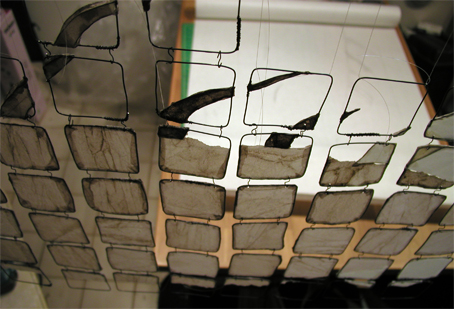
I’ve had some struggles with the piece last week. Part of my problem was trying to figure out the best hanging system for the fish.  Solution: measure and drill holes into a wood strip and use light weight fishing line to hang squares. This will make adding additional rows a snap…. well, in theory!

Final part to complete and hang tonight: the tail section!

Then I can move forward on rows 2 & 3, then 4&5.

Thanks for taking a look!

🙂

Unseen Natives: Maquette

This is my adventure into creating an art installation for the Art in Rural Storefronts project sponsored by The Arts Center of Corvallis. ARS serves regional audiences in Linn and Benton Counties by bringing innovative, thought- provoking art projects to rural communities that lack spaces dedicated to contemporary/non-commercial art.  Three artists  were chosen to participate.  The project is funded in part by the Oregon Arts Commission.

November 1: It’s time to unveil the maquette for this project.

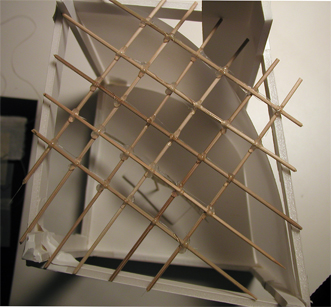
The fish will be suspended from an overhead grid. I’m still trying to decide if eggs will reside under the fish.  If yes, then they will be lighted.

You might also be wondering what all the squiggly lines are in the backdrop? Think river systems. Squares and rectangles of paper the squiggles are drawn on connect to agricultural lands.

Below photo: Looking down on the piece. It’s a tad goofy looking with the wooden skewers, artist tape and foam core, but it will help me in the end.

Besides the corner window, there are two additional long windows (32″ high by 92″ long). They will receive the same river system on paper treatment.  Hanging and lighted.  No additional fish planned at this time.

Thanks for taking a look!

DFP Name change: Unseen Natives

This is my adventure into creating an art installation for the Art in Rural Storefronts project sponsored by The Arts Center of Corvallis. ARS serves regional audiences in Linn and Benton Counties by bringing innovative, thought- provoking art projects to rural communities that lack spaces dedicated to contemporary/non-commercial art.  Three artists  were chosen to participate.  The project is funded in part by the Oregon Arts Commission.

For the rest of this projects life it will be known as the Unseen Natives.

Saturday and Monday work consisted of creating squares and covering them with paper. Tedious. So far I’ve used up 150 feet of the 19 gauge wire and over 50 feet of 28 gauge. Tuesday had many interruptions so little was accomplished. Today is a bit scattered too.

Photos of what’s happening:

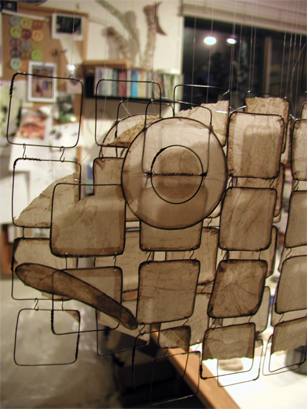
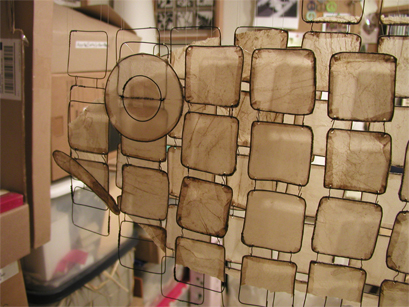
This is the center core of the piece. There will be 4 additional layers of hanging squares by completion.

Starting to shape paper inside squares needing curved features

A  close up:

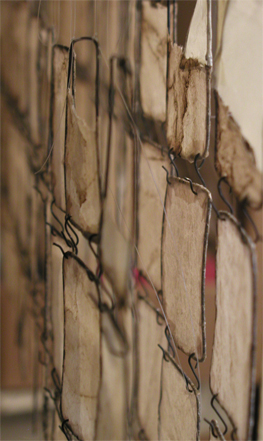
A little more progress: the start of row hanging!

More to hang. Also more “S” hooks to create using 22g wire. Tedious work ahead (gosh, I think I said that already!). Glad I can get in a jog every morning to loosen up the brain and limbs.

With the speed I’m producing, only one full fish will be created. There are still eggs and background imagery to work through as well. This is why I’ve not submitted my full plans to Hester.

Ditch Fish Project: starting to get fishy

This is my adventure into creating an art installation for the Art in Rural Storefronts project sponsored by The Arts Center of Corvallis. ARS serves regional audiences in Linn and Benton Counties by bringing innovative, thought- provoking art projects to rural communities that lack spaces dedicated to contemporary/non-commercial art.  Three artists  were chosen to participate.  The project is funded in part by the Oregon Arts Commission.

This project is about the unseen native fish that spawn during winter/spring months amongst the intermittent drainage ditches of the Willamette Valley agricultural fields. Most fields in our region are devoted to growing grass seed. Linn county is one of the largest producer of this crop. In 2009, researchers at Oregon State University published a study showing that the muddy waterways of the grass farms really do help contribute to the native fish population. They discovered 13 of species total (several were nonnative). Four of the most observed fish were the Red-Sided Shiner, Three-Spined Stickleback, Dace and the Reticulate Sculpin. Juvenile Cutthroat Trout and Chinook Salmon were also part of the findings. They determined fish were actually spawning and using the flooded fields as nurseries. Areas of lower turbidity water was a plus to fish family life.

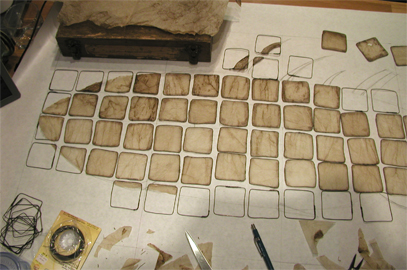
The first fish I’ll tackle will be a Three-Spined Stickleback. These little guys only measure about 4 to 6 cm in real life. I’ll be creating one about 50 inches total length. You can see my metal 24″ ruler in the photo below. The image is roughly drawn in pencil using a grid system to help me better understand relationship between squares, fish shape & open space. The pencil drawing didn’t show up too well in the photo.

Now starting to get a generalized idea of how to work with the squares.

All the squares will be hanging vertically in the end, not laying on a flat surface.  😉

Maybe Unseen Natives is a good title for this piece….

On a different note:

Last night we took a road trip to Portland for a two person show at the Guardino gallery (Cynthia Spencer and Robert Sumner). Cynthia is a great friend and amazing ceramic artist. There was no way we would miss her opening!  The show features her large stacked ceramic garden sculptures along with great indoor sculptures combining ceramics, paper and wire. A few years back she took a mini paper and wire workshop from me during the branch installation at The Arts Center. Who knew it would rub off and spawn a new line of work for her!  I have to admit I was blown away at the combination of media. Robert’s work was equally impressive with fascinating paintings and wonderful collagraph prints. It took me a little while to realize I own several of his small prints (they are waiting in a flat file drawer to be framed and out on view). I can’t believe we didn’t have our phones or camera along to snap a few photos of event. Congratulations to them both for a great show! May some of the larger works SELL!!!

Ditch Fish Project: wire square work

This is my adventure into creating an art installation for the Art in Rural Storefronts project sponsored by The Arts Center of Corvallis. ARS serves regional audiences in Linn and Benton Counties by bringing innovative, thought- provoking art projects to rural communities that lack spaces dedicated to contemporary/non-commercial art.  Three artists  were chosen to participate.  Art in Rural Storefronts is a collaboration between The Arts Center and Rural Development Initiatives. The project is funded in part by the Oregon Arts Commission.

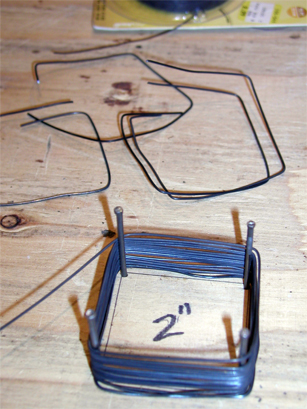
I created a jig using nails in plywood to consistently bend wire for the squares. I chose a 2″ size which will actually yield a bit larger form. Why 2″? It seemed to be a nice unit to work with, not too big and not too small. The square frames are created from 19g wire: easier to bend but not too narrow to get floppy during paper covering.

After winding wire around the nails and cutting so there was a .25-.5″ overlap, the squares  were closed shut with a wrapping of 28 gauge. The box is great for storing finished work.

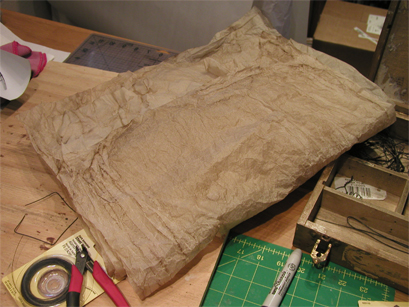
Paper is now dried and flattened.

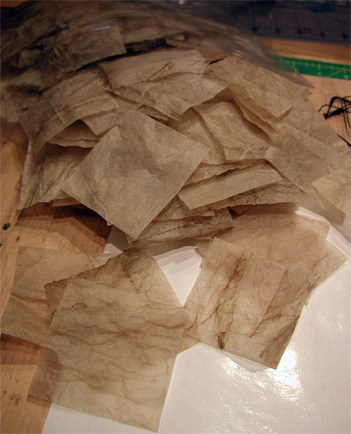
And cut into 2.5″ squares. I should have estimated a tad more!

Gluing paper around a wire form.

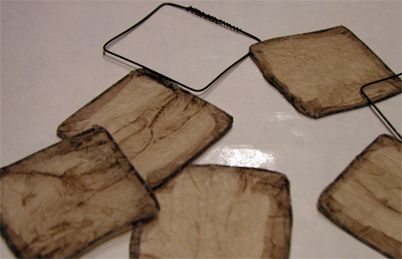
Finished squares.

On to creating a lot more squares and a fish sketch to scale!

So why squares and where is this project leading? You’ll find out more soon! I should also consider changing the name of the project to something that reflects the connection between agriculture and native fish populations.

Ditch Fish Project: Paper prep

This is my adventure into creating an art installation for the Art in Rural Storefronts project sponsored by The Arts Center of Corvallis. ARS serves regional audiences in Linn and Benton Counties by bringing innovative, thought- provoking art projects to rural communities that lack spaces dedicated to contemporary/non-commercial art.  Three artists  were chosen to participate.  Art in Rural Storefronts is a collaboration between The Arts Center and Rural Development Initiatives. The project is funded in part by the Oregon Arts Commission.

It’s been almost a year since my last foray into dying tracing paper. On the last go, I used a reduction of boiled coffee grounds. This time it’s with a walnut dye. Boy, does this stuff stain!

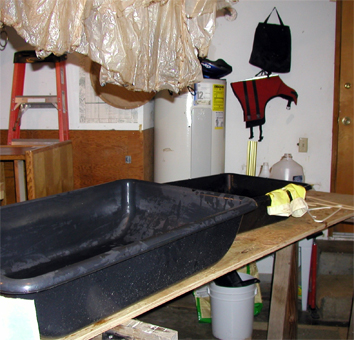
The weather has become unpredictable. Rain with sun/grey breaks and cooler temps. Mountain passes are receiving a healthy dose of snow. Not the sort of weather to work outside. Fortunately, I cleared some space in the garage for a dye/dry station.

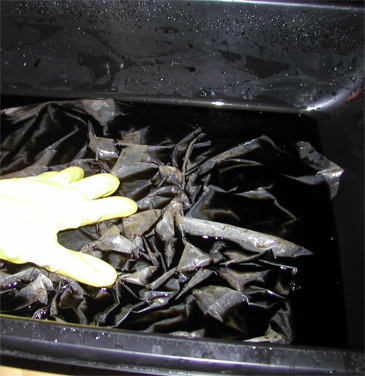
Dye bath

One of my questions has been “how long to leave the paper in the solution?” So far it’s only been a couple of minutes max. I’ve also been trying crumpled/distressed paper vs flat. I think the crumpled captures more dye and interest.

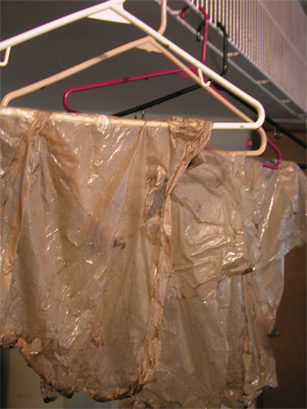
Hanging wet paper from plastic coat hangers

Drip catch system

Once the paper stops dripping, I’ll be able to bring them indoors to finish drying. Note to self: don’t leave the paper in the dye bath too long because it starts to fall apart. Also don’t try to squeeze out the water. Paper really does tear apart when wet!

I thought my paper stash still contained more rolls of tracing paper left over from the branch installation back in 2010. Nope. Time to head to the art supply store. I’ll also need to hit the hardware store for more 19g wire. The 3 Spined Stickleback fish is the first in line for creation.

More prep to come!